IMMERSIVE DRAWING
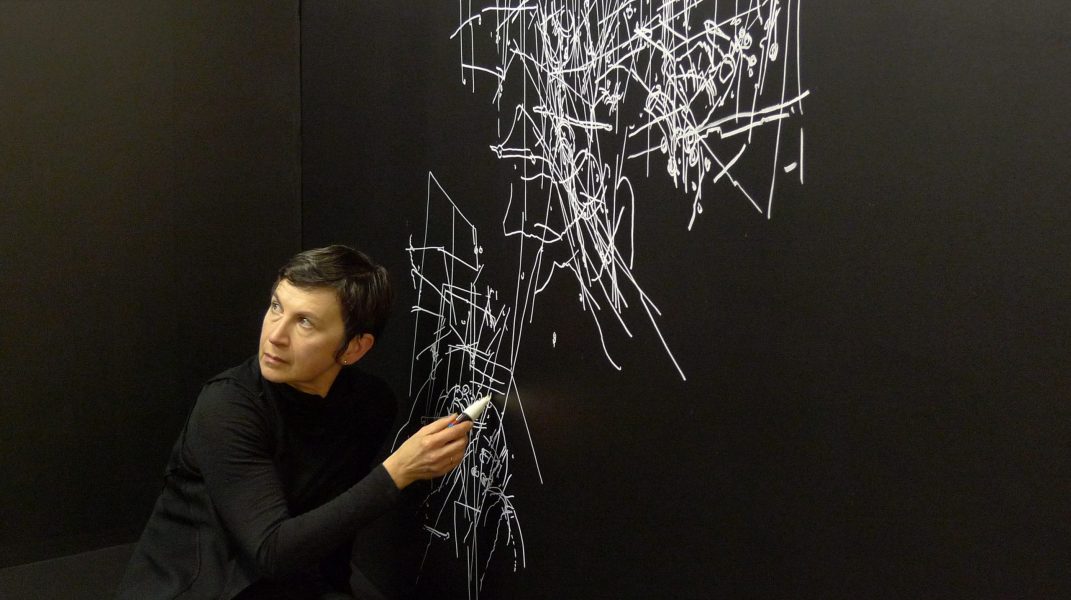
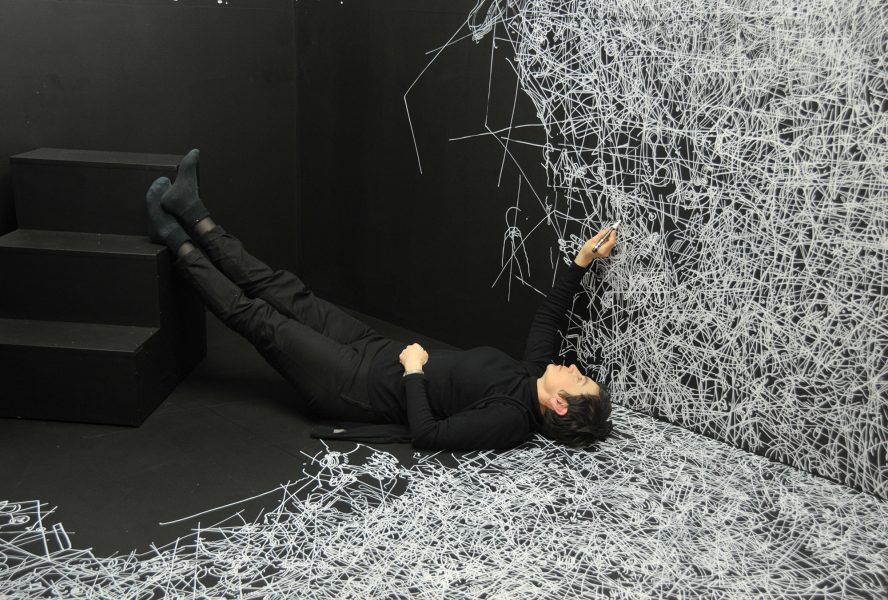
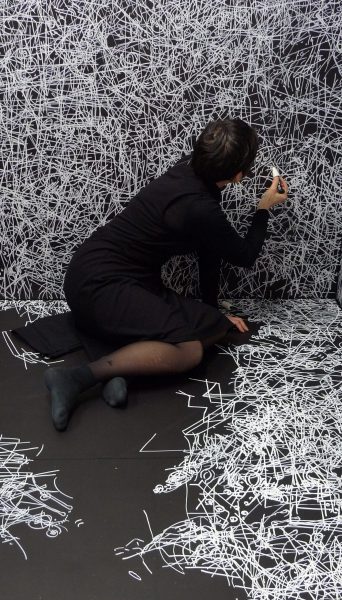
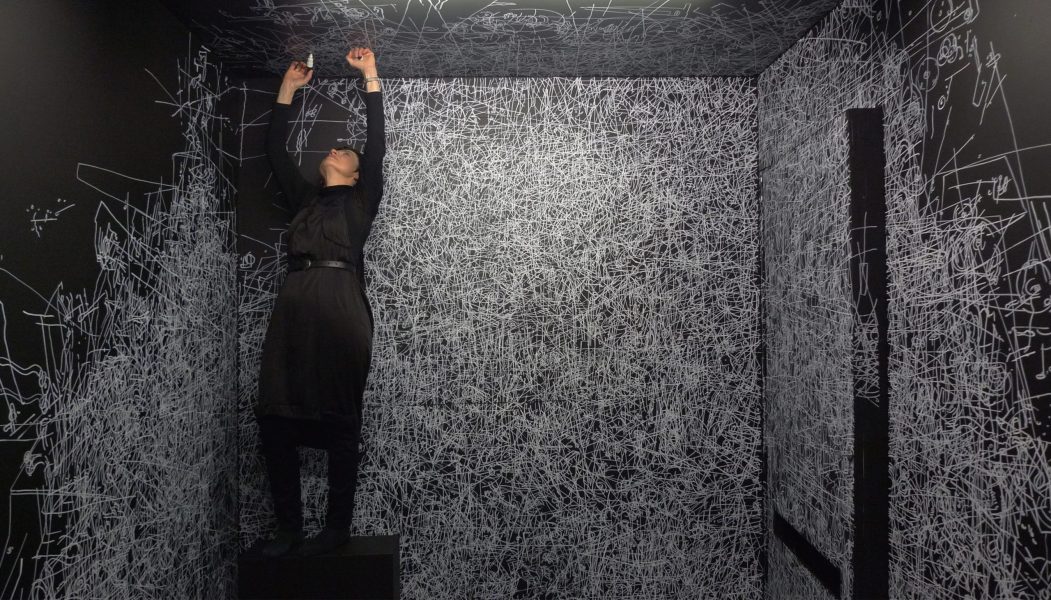
A ROOM WITHOUT A VIEW
In A ROOM WITHOUT A VIEW my creative process conceptually challenges the crucial principles within my practice:
1. I like to perceive the ability of looking, and seeing all complexity of the world around me, as the ways to be consciously anchored in the present moment and to realise the fact of being alive. I use the language of drawing to talk about these issues.
2. Building a registry of the everyday and harvesting all evidence of now, I do not work enclosed in an artist’s studio but in various private and public spaces where ordinary life goes on.
RE1: Sensory Limitation
I always draw my environment as I see it, in real time – tracing and re-tracing the visible. The intention is to record the present time continuous moment, to archive my space-time, all bits of present and my mind’s realisation of now. I try to translate my living energy into the drawn line.
The line I draw is shaped into outlines of real things that my eye registers by its every glance. Because I consistently draw what I see – never from imagination—the structure of my works is built up from myriads of “frozen” glances (moments of “looking at”) captured by my eyes and drawn as linear shapes to form a visual archive of the specific time-space.
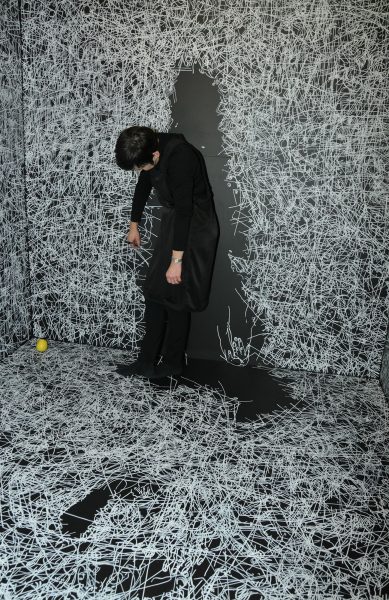
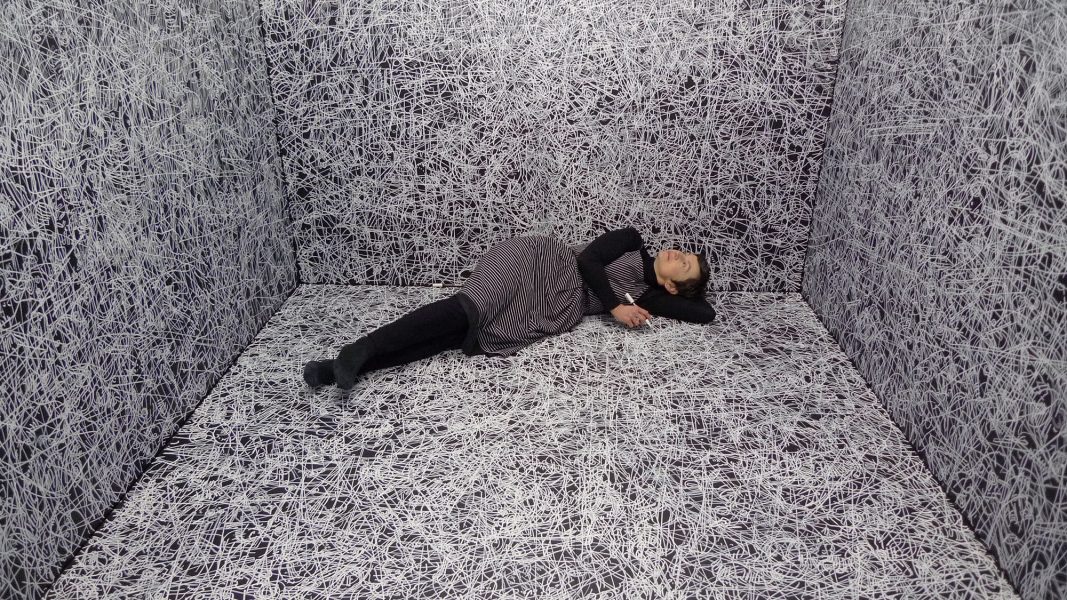
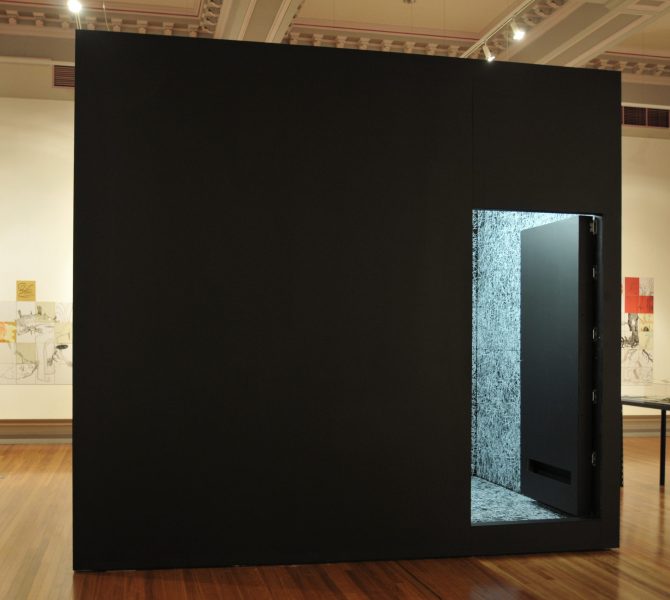
In the work A ROOM WITHOUT A VIEW I have been deliberately denying myself the complex stimuli of my senses (especially sence of sight). I am performing/creating my work while enclosed inside a small empty room with black walls, ceiling and floor.
• My situation can remind one of a mental patient, a prisoner confined down to a dark cell, a captive… placed in unusual conditions where they are refrained from experiencing change, exchange and complexity of the world outside.
—But also—
• It intends to make one think of an embryo in the womb—experiencing the womb as the whole universe.
Among many questions, that have been arising during the project I am asking:
• Can subjecting myself to lack, or rather extensive reduction, of everyday stimuli (isolation in small black space, constraints of “black nothing”) result in the feeling of “no time passing”?
• Can the process of thinking alone create a certainty of the difference, therefore time passing?
RE2: Social Context
Various projects I stage and create in public or private environments, research the idea of personal space versus shared space. My time-space coexists with a myriad of different time-spaces inhabited by living beings and things. I register them by my sense of sight as shapes floating in the liquid of reality. These shapes are in a continuous process of meeting, overlapping and collision—in endless movement, the ongoing change and exchange.
Placing my projects (performances and processes) within a context of the everyday life, I probe and document diversity of human behaviour—the microcosm of individual reactions within the macrocosm of our social co-existence—mapping cultural and social similarities and differences and the “landscape” they inhabit.
The social context and exchange, public participation (as a conversation partner, or as a viewer), act like a mirror helping and enabling me to realise and assess my own being. I think about our simultaneous presence as an exchange of “imprints” (gestures, gazes, reaction, luck of them) defining the shared time-space. We see ourselves through/in the eyes of others.
A ROOM WITHOUT A VIEW is a unique creative situation, in opposition to my socially focused practice
• Isolation can distort my everyday perception of time-space which I see as always crossed/overlapped with the time-spaces of others. During my short (six hours in 14 performance days) isolation I am probing and examining the effects of loneliness within the drawing and possible mutation of my inner-self conversation.
—But also—
• It directs me to conceptually “enter” the internal universe of my body: the organs, fluids, cells… Concept of being self-centred in an organic sense:
Nothing to look at except my body
Nothing to listen to except the sounds I am making
No one to be touched by – except myself
The world is I…?